1. Ore hardness:
Conduct rational ore blending to achieve uniform particle size as much as possible, ensuring a balanced ratio of lump and powdered ore. Additionally, at the ball mill belt feeder, prolonged wear may cause ore leakage, primarily fine particles. Such spilled ore must be promptly replenished into the ball mill. If accumulated and added in bulk, it will cause uneven feeding, leading to unstable production. This is particularly critical for difficult-to-process ores, where fine and lump particles often exhibit distinct properties.
2. Crushing Size and Screen Mesh:
Ball mill operators must monitor the crushing system. Any changes in feed particle size during production must be immediately reported to the crushing workshop. Ultimately, finer crushing is preferred.
3. Ball Mill Model, Rotational Speed, Feed Rate, Steel Ball Quantity, and Size:
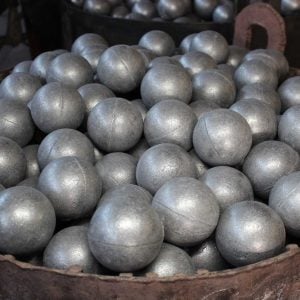
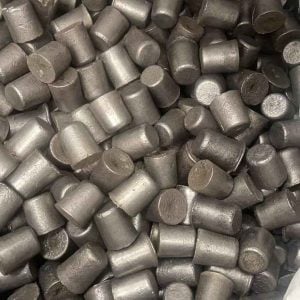
Ensure these specifications are verified during purchase inquiries.

4. Classifier main shaft lifting height:
After equipment maintenance, some ball mill operators at mineral processing plants fail to thoroughly clean mineral residue from the classifier. Over time, this residue settles densely. When lowering the classifier main shaft, carelessness may prevent full descent, resulting in reduced sand return compared to normal conditions. Additionally, failure to fully lower the shaft may stem from prolonged neglect in cleaning and lubricating it. Therefore, extra attention must be paid during operation.
5. Blade wear:
Worn blades reduce return sand volume, leading to coarser grinding fineness. Furthermore, severe blade wear shortens the classifier’s lifespan. Thus, regularly inspect blade wear during operation and promptly replace worn blades.

6. Height of the overflow weir in the classifier:
This determines the size of the sedimentation zone for the ore slurry. During production, we can adjust the height of the classifier overflow weir appropriately based on the required grinding fineness. If finer grinding is needed, angle iron of a specific height can be welded along both edges of the classifier. The height of the overflow weir can then be adjusted by inserting wooden wedges. Sometimes, long-term accumulation of fines can naturally raise the weir height.
7. Height and size of classifier openings:
A low lower opening increases the mineral sedimentation zone, leading to higher return sand volume and finer grinding. A large lower opening also increases the sedimentation zone but with a relatively gentler flow, resulting in greater return sand volume and finer grinding. A high upper opening produces relatively finer grinding with smaller return sand volume. A large upper opening yields relatively finer grinding with larger return sand volume. resulting in slower water flow, increased return sand volume, and finer grinding fineness. A low upper opening leads to relatively higher return sand volume and finer grinding fineness, while a large upper opening results in relatively higher return sand volume and finer grinding fineness. The opposite holds true for the lower opening.

9. Ball Mill Water Supply Volume:
Increasing water supply to the ball mill dilutes the grinding concentration, resulting in coarser grinding fineness. Conversely, reducing water supply increases grinding concentration, leading to finer grinding fineness.
10. Water Flow at Ball Mill Discharge Outlet:
Increasing water flow at the discharge outlet dilutes the overflow, producing finer overflow particles. Conversely, reducing water flow at the discharge increases the concentration of the overflow, resulting in coarser overflow particle size. Therefore, under constant conditions including unchanged ore feed rate, to improve grinding fineness, reduce ball mill feed water and increase water flow at the discharge. Ideally, adjust both parameters simultaneously to minimize fluctuations in flotation caused by changes in pulp volume resulting from grinding fineness adjustments. Provided the grinding fineness is assured, the feed rate to the ball mill can be significantly increased.