Mining Grinding Ball Case

Brazil Gold Mine—Enhancing Gold Extraction Efficiency Customer

1. Overview

Our customer is a large gold mining company in Brazil. Their open-pit project focuses on oxide-sulfide mixed gold ore in quartzite and conglomerate. The beneficiation plant is equipped with a 12-stage CIL leaching system.

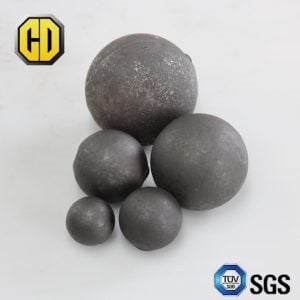
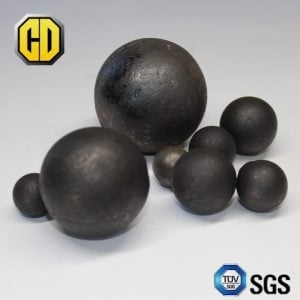
grinding ball for mining industry
Mountain of gold bars in a mining field During the day, there are cranes and trucks in the background, all golden and bright.

2.Problem

Long-term use of ordinary low-chrome cast balls led to high costs (16 million BRL/year) and high dissolution of sulfur and iron impurities due to ball wear. This caused unstable CIL leaching, extending leaching time to 22 hours, with a gold recovery rate of only 91%-92%.Compounding the pressure of rising energy and labor costs in the Brazilian mining industry year after year, the customer urgently needed a customized solution adapted to local ore characteristics and the Carbon-in-Leach (CIL) process to achieve the triple objectives of ‘reducing media cost, stabilizing recovery rate, and improving production efficiency.

3.Customer Request

  • Reduce annual media procurement costs by >15% without lowering gold recovery;
  • Optimize CIL stability;
  • Shorten leaching time;
  • Reduce cyanide/energy consumption.

4.Chengda Proposal

After a 35-day on-site survey, Chengda proposed a Cr20-Ni0.3 Ultra-Low Sulfur High Chrome Customized Grinding Ball replacement.

Chengda Product Inspection
Alloy Formula Optimization:
  • Chromium (Cr) content was raised to 20% to strengthen the surface wear layer, significantly reducing media wear rate.


  • 0.3% Nickel (Ni) element was added (conforming to the industry standard for low-nickel rust inhibition, avoiding excessive cost increase). By refining the metallographic structure, this addition inhibits the dissolution of Fe²⁺ and Mn²⁺ ions, preventing them from combining with cyanide to form ineffective complexes.


  • Sulfur (S) content was strictly controlled at 0.03% (significantly lower than the industry standard of 0.06%), further minimizing the interference of sulfides with the leaching reaction.

14
Process Upgrades:
  • Process Upgrade: The combined process of ‘High-Temperature Forging + Isothermal Quenching’ was employed, stabilizing the hardness of the steel cylpebs at HRC 62-66, with a surface-to-core hardness difference of ≤3HRC. This avoids the rapid wear caused by the ‘hard surface, soft core’ issue common in ordinary cast cylpebs. The steel cylpebs’ surface was de-scaled and given residual compressive stress, further enhancing their resistance to fatigue wear.
CD company
Cost Calculation
  • The estimated annual procurement cost for the customized grinding balls was projected to drop to 13.2 million BRL, resulting in a direct saving of 2.8 million BRL. We committed that if the gold recovery rate did not exceed 94% or the cost-saving target was not met, the difference would be fully compensated, and subsequent formula adjustment services would be provided free of charge.

5. Monitoring System

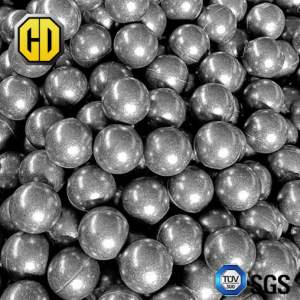
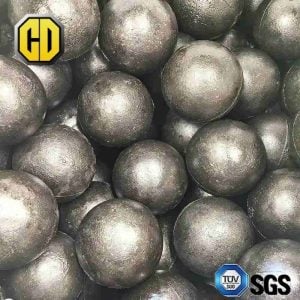
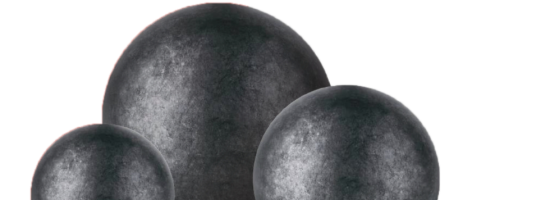
high chrome grinding ball
Media Loss Monitoring
  • Samples were collected from the mill discharge opening 3 times a week to calculate the steel ball wear rate and breakage rate, comparing the unit ore consumption difference between the new and old media.

Chengda Grinding Ball Quality Details10
CIL Process Monitoring
  • Pulp samples from the 12 leaching tanks in the CIL system were collected every 24 hours to test PH value, Fe²⁺/Mn²⁺ concentration, and cyanide concentration, while recording the leaching time and carbon adsorption efficiency.
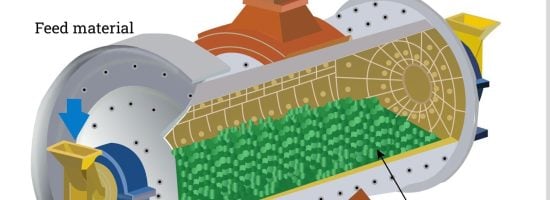
ball mill ball motion
Recovery Rate Monitoring
  • The actual gold recovery rate was calculated daily by analyzing the gold concentrate grade using an Atomic Absorption Spectrophotometer and combining it with the original ore throughput, forming a linked analysis ledger of “Media Loss – Process Parameters – Recovery Rate.”

6.Results Feedback

Monitoring data from 90 days of continuous stable operation showed:

  • Cost Aspect:The actual wear rate of the customized grinding balls was significantly reduced by 61.3% compared to the original low-chrome balls.The annual procurement cost for grinding media was reduced to 12.9 million BRL, a saving of 3.1 million BRL from the original cost, achieving a cost reduction rate of 19.4%.
  • Process Aspect: Due to the effective inhibition of metal ion dissolution by the 0.3% Ni element, the concentration of Fe²⁺/Mn²⁺ in the pulp dropped by 71.7%. Cyanide consumption per unit decreased by 10.6%.The PH value stabilized in the optimal range of 10.3-10.6. The CIL system leaching time was shortened from 22 hours to 18 hours, and the energy consumption for agitation and temperature control was reduced by 18.2%.

  • Benefit Aspect:The gold recovery rate steadily increased from the original 91.8% to 94.7%, achieving stable growth.The corresponding annual gold recovery amount increased from 68.1 tons to 75.66 tons, with a new recovery increase of 7.56 tons, showing a significant improvement in resource recovery efficiency.

The customer has now signed a 3-year exclusive supply agreement with Chengda and has included two other large gold ore dressing plants in Minas Gerais in the media replacement plan.

SAG Mill  Motion
SAG mill loading CD forged balls
grinding ball production line
Heat treatment production line
Metallographic Examination
Metallographic microstructure
Sea freight container loading 1
Shipment to South Brazil
Scroll to Top