Metallurgy Grinding Ball Case

Korean Metallurgy — Fine Grinding and Corrosion Resistance

1. Overview

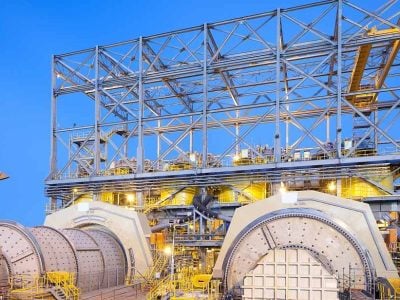
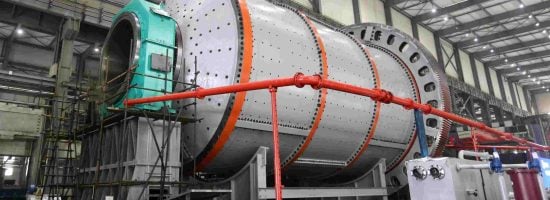
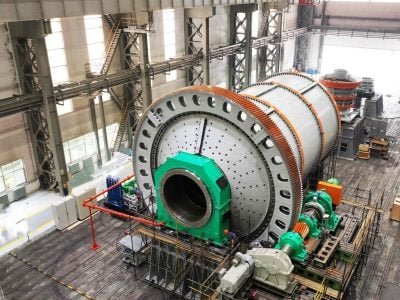
Our client is an iron ore pellet sintering plant in South Korea. As a major iron ore pellet production base in the country, the plant boasts an annual capacity of 6 million tons of pellets. It is equipped with four Φ3.6×6.0m wet ball mills, which handle the fine grinding process of magnetite concentrate.Previously, the plant utilized traditional alloy cast balls for an extended period.

Chengda Customer Ore Mining Case Study Chengda Mining Case5
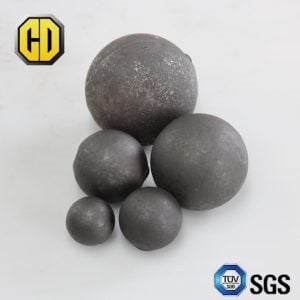
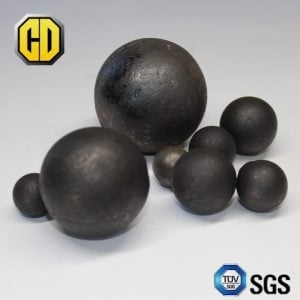
grinding ball for Metallurgy industry

2.Problem

Under the operating conditions of wet grinding high-concentration magnetite slurry (solid-liquid ratio 1:1.2), a series of critical issues emerged:

  • Severe Media Deformation: After 2,000 hours of use, the grinding media suffered severe deformation and flattening (with a deformation rate reaching 8.3%);
  • Unstable Grinding Quality: There were significant fluctuations in the particle size of the ground product (the proportion of -200 mesh varied between 65% and 78%);
  • Operational Inefficiency: Frequent shutdowns were required to replace the media (resulting in annual downtime exceeding 120 hours).

3.Customer Request

  • First, resolve the issues of media deformation and high wear to extend the service life of the grinding media to over 3,000 hours;
  • Second, stabilize the particle size of the ground product by maintaining the proportion of -200 mesh consistently above 85%. This is intended to enhance the compressive strength of the pellets to comply with Korean Industrial Standards;
  • Third, reduce the frequency of mill shutdowns for media replacement to keep annual downtime within 60 hours. This aims to boost the capacity utilization rate to over 92%, aligning with the “High Efficiency and Low Carbon” development initiative of the Korean metallurgical industry.

4.Chengda Proposal

After an in-depth 28-day on-site investigation, our team has developed a tailored solution based on the factory’s wet ball mill operating parameters and the abrasive characteristics of the magnetite slurry. We propose a “CADI Rough Grinding + High-Chrome Fine Grinding” combined media strategy.

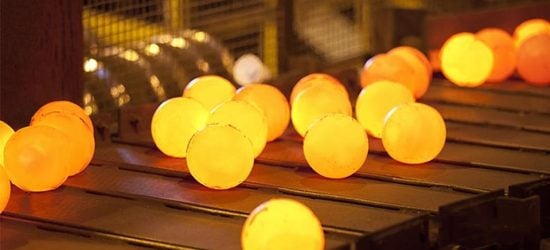
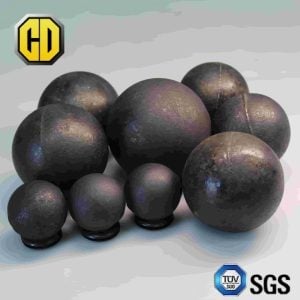
CD forged grinding ball
Media Selection Optimization
  • We utilize Chengda CADI Austempered Balls (diameter 60–80 mm) for Rough Grinding Chamber. Through an austempering process, these balls achieve a microstructure of lower bainite and spherical graphite. With impact toughness ≥12J/cm² and hardness stabilized at HRC 58–62, they effectively resist deformation and breakage under high loads.Fine Grinding Chamber.
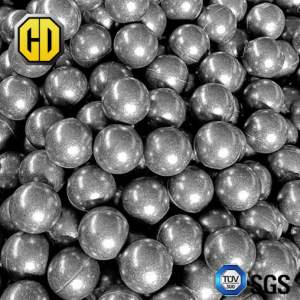
  • We pair this with High-Chrome Cast Balls (diameter 30–50 mm). The Chromium content is elevated to 22%, forming a dense wear-resistant surface layer with hardness reaching HRC 62–66, perfectly adapted to the fine grinding requirements of highly abrasive slurry.
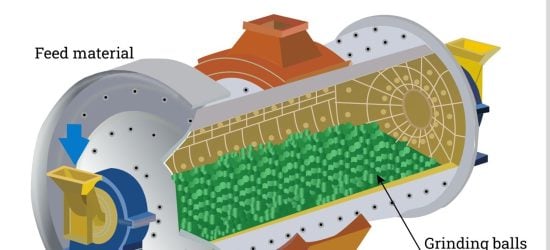
ball mill ball motion
Ratio & Process Adaptation
  • Filling Strategy: The mill is filled at a ratio of 60% CADI Austempered Balls (Rough Grinding) and 40% High-Chrome Cast Balls (Fine Grinding), with the total filling rate controlled at 30–32%.
  • CADI Balls undergoes surface shot blasting reinforcement to minimize corrosive wear in the wet grinding environment;

  • High-Chrome Balls: Manufactured using precision casting to ensure a roundness error ≤0.5mm, preventing issues with uneven particle sizes during the grinding process.

DM_20251008154840_006
Cost & Performance Commitment
  • Based on an annual processing capacity of 6 million tons of magnetite concentrate, this combined media solution offers the following benefits and guarantees:Performance: Service life extended to over 3,500 hours.
  • Savings: Annual media procurement costs reduced by 33.3%.Guarantee: We commit that if the media service life falls short of the target or if pellet strength fails to meet requirements, we will replace the media free of charge and assume liability for any blast furnace production losses caused by product quality issues.

5. Monitoring System

Chengda Grinding Ball Quality Details7
Media Performance Monitoring Routine Inspection
  • Conduct inspections every 30 days to track the deformation rate and wear loss of the media inside the mill.Utilize a laser diameter gauge to measure changes in ball diameter, statistically analyzing the media integrity rate at the 2,000-hour and 3,000-hour marks. Periodically test the hardness and impact toughness using Rockwell hardness testers and impact testing machines to ensure performance stability.
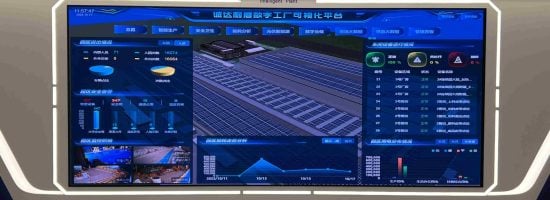
ChengDa Intelligent Plant
Grinding & Product Monitoring
  • Collect slurry samples from the mill discharge port every 12 hours. Use a laser particle size analyzer to detect particle size distribution (focusing on the -200 mesh percentage). Regularly test the compressive strength and drop strength of the sintered pellets. Compare these results against historical data to evaluate the quality improvements of the new combined media scheme versus the old solution.
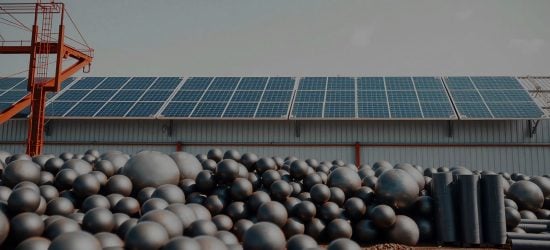
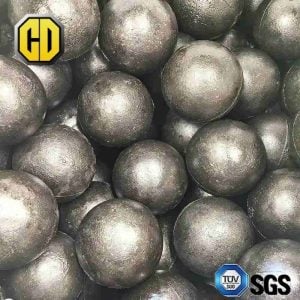
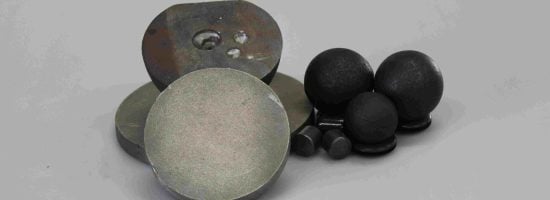
ball mill ball
Operational Efficiency Monitoring
  • Record the frequency and duration of downtime required for media replacement to calculate the annual capacity utilization.Collect real-time data on mill current and energy consumption to analyze the specific impact of the combined media solution on grinding efficiency and energy usage.

6.Results Feedback

Monitoring data from 12 months of continuous stable operation indicates the following:

  • Media & Cost Performance: Chengda’s combined media service life reached 3,650 hours (an increase of 82.5% compared to traditional alloy cast balls). After 2,000 hours, the media deformation rate was only 1.2%. Annual media procurement costs decreased by 39.6%.
  • Product Quality: The proportion of -200 mesh in the ground product stabilized at 88%–90%, with a particle size fluctuation range of ≤2%. Pellet compressive strength far exceeded industry standards. Drop strength (at a height of 5m) reached 98%, fully meeting the stringent raw material requirements for blast furnace iron making.

  • Operational Efficiency: Annual mill downtime for media replacement was reduced to 48 hours, increasing capacity utilization to 93.5% and boosting annual pellet production by 450,000 tons. Due to improved grinding efficiency, unit energy consumption dropped by 12%. This reduced carbon emissions by approximately 3,800 tons per year, aligning with South Korea’s low-carbon metallurgy policy.

The client has now included Chengda in their Group’s Core Excellent Supplier List. Furthermore, they plan to highlight Chengda Wear Resistant’s technical capabilities and product reliability to multiple member units during upcoming industry supply chain matchmaking events organized by the Korea Iron & Steel Association.

Clinker grinding chamber
Ball mill feeding section in iron ore plant
Metallographic Examination
CADI microstructure (bainite + carbide) under microscope
ChengDa Production Line Process3
Heat treatment production line
Sea freight container loading 4
Packaging and shipment to Korean
Scroll to Top