
Vertical Mill Grinding Balls
Product Advantages
- Precise Condition Adaptation: Customized for the impact-grinding composite conditions of vertical mills. By optimizing alloy formulas and process designs, they perfectly match equipment operating characteristics, avoiding low efficiency or equipment damage caused by mismatched media.
- Excellent Hardness-Toughness Balance: Combining high hardness (HRC 58-68) with strong toughness, they stably withstand high-frequency impact and friction in vertical mills. Maintaining shape and dimensional accuracy over long-term use, with a breakage rate ≤0.8%.
- Outstanding Customization Ability: Supports full specification ball diameter selection. Chemical composition (e.g., Chromium, Carbon ratios) can be precisely adjusted according to material hardness and grinding precision requirements.
- Significant Quality Improvement & Consumption Reduction: Relying on excellent wear performance to extend grinding media life and equipment continuous running time, while reducing media loss and energy consumption.
1Vertical Mill Grinding Balls—The Core for Efficient Vertical Grinding
Vertical mills have become key grinding equipment in mining and building materials industries due to their low energy consumption and high output. Their operating efficiency is closely related to the adaptability and wear resistance of the grinding media. Chengda Vertical Mill Dedicated Wear-Resistant Steel Balls are customized for the unique conditions of vertical grinding. Relying on precise process design and optimized alloy formulas, they achieve a perfect balance of high hardness and strong toughness. The products support customization of diameter and composition according to material characteristics and grinding requirements, fully adapting to vertical mill needs.
Tower Mills Motion
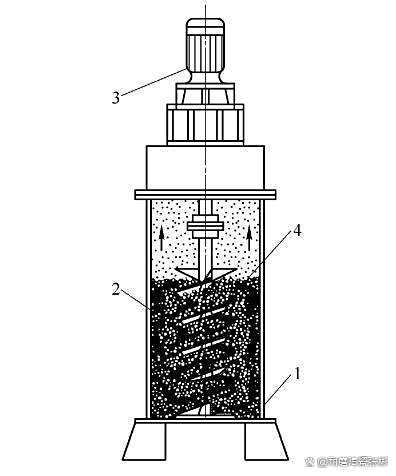
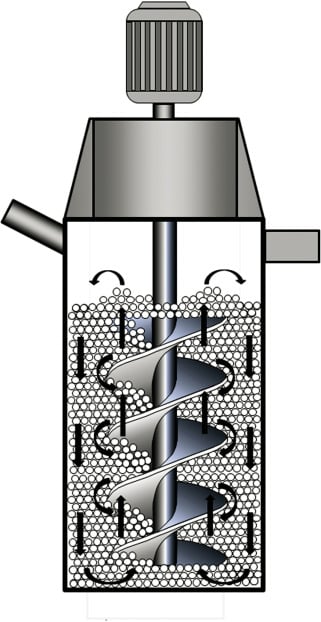

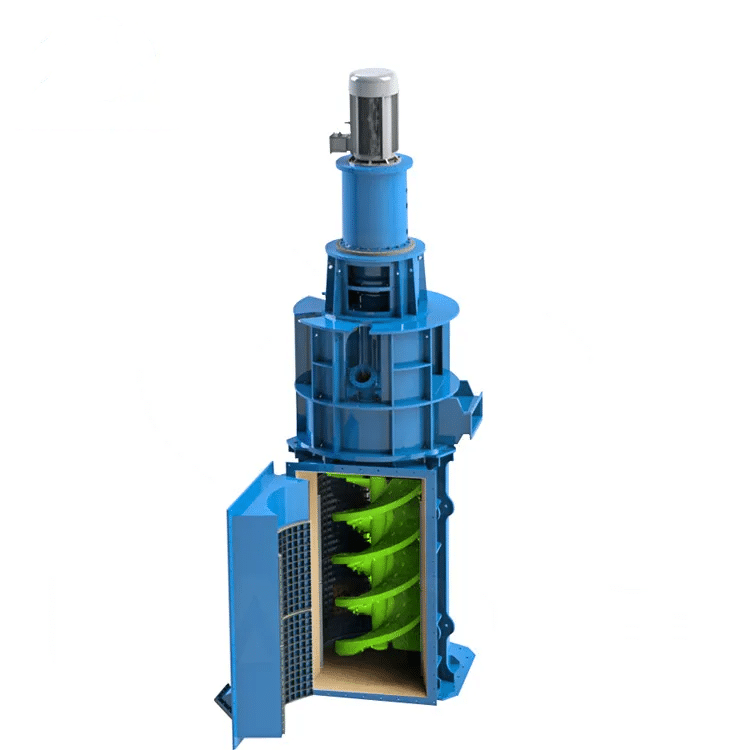
2.Vertical Mill Grinding Ball Parameters Comparison Table

.jpg.webp)
.jpg.webp)
| Parameter | High Chrome Cast Ball | Medium Chrome Cast Ball | Forged Steel Ball |
|---|---|---|---|
| Diameter Range | 4.6mm-140mm | 4.6mm-140mm | 4.6mm-140mm |
| Material Type | Chrome Alloy White Cast Iron | Chrome Alloy White Cast Iron | Alloy Forged Steel |
| Chemical Composition |
C: 2.0–3.2% Si:≤1.0% Mn:0.3-1.5% Cr: 10-28% P:≤0.06 S: ≤0.06% |
C: 2.0–3.2% Si:≤1.0% Mn:0.3-1.5% Cr: 4-8% P:≤0.08% S: ≤0.06% |
C: 0.42–1.03% Cr: 0.25–1.2% Mn: 0.5–1.1% Si: 0.17–1.9% P:≤0.035% S:≤0.035% |
| Hardness (HRC) | ≥60 | ≥48 | ≥55 |
| Impact Toughness | ≥5.5 J/cm² | ≥3.5J/cm² | ≥15 J/cm² |
| Breakage Rate | ≤0.5% | ≤1.0% | ≤0.5% |
| Application Industries | Large/Medium Cement/Building Material Vertical Mills (Limestone, Fly Ash) | Small/Medium Mine/Building Material Vertical Mills (Slag, Coal Gangue) | Large Vertical Mills, High Impact Conditions (Copper/Gold/Iron/Nickel Ores) |
3.Production Process
- Forged balls: Heat the steel billet → High-pressure forging into balls → Precision heat treatment → Uniform hardness distribution

- Cast balls (Aubay balls): Patented alloy formula → Metal mold casting → Self-hardening & heat treatment → High-toughness martensitic structure
